DYMA

EMPOWERING FINANCIAL INSTITUTIONS THROUGH AUTOMATION

Automating critical business processes with secure software solutions for 18 years.
Why Choose Us?

Our Commitment to Excellence

Agility and Expertise

Quickly adapt to client's needs with a seasoned team of industry experts.

Personalized Service

Direct access to senior professionals ensures tailored solutions.

Proven Track Record

Documented success across diverse projects and clients.

Optimized Solutions

Delivering exceptional value and efficiency, maximising your ROI.

Years of Experience
0
Projects Completed
0 +
Success Rate
0 %
Why Choose Us?

Our Commitment to Excellence

Agility and Expertise

Quickly adapt to client's needs with a seasoned team of industry experts.

Personalized Service

Direct access to senior professionals ensures tailored solutions.

Proven Track Record

Documented success across diverse projects and clients.

Optimized Solutions

Delivering exceptional value and efficiency, maximising your ROI.

Years of Experience
0
Projects Completed
0 +
Success
Rate
0 %
Success Rate
0 %
About Us

Your Partner in Technology Integration & Transformation

At DYMA, we bring a combined 50 years of expertise and experience in developing innovative high performance IT solutions for banking and finance.
We have spent the last 18 years, doing more than 70 + projects with banks with 100% project success rate. With our headquarters based in the United States of America and our global offices located in United Arab Emirates and Malaysia. We are dedicated to delivering strategic and tailored solutions that meet the unique challenges of our clients globally.
Our Solutions

Explore Our Solutions

Our Blog

Latest Articles

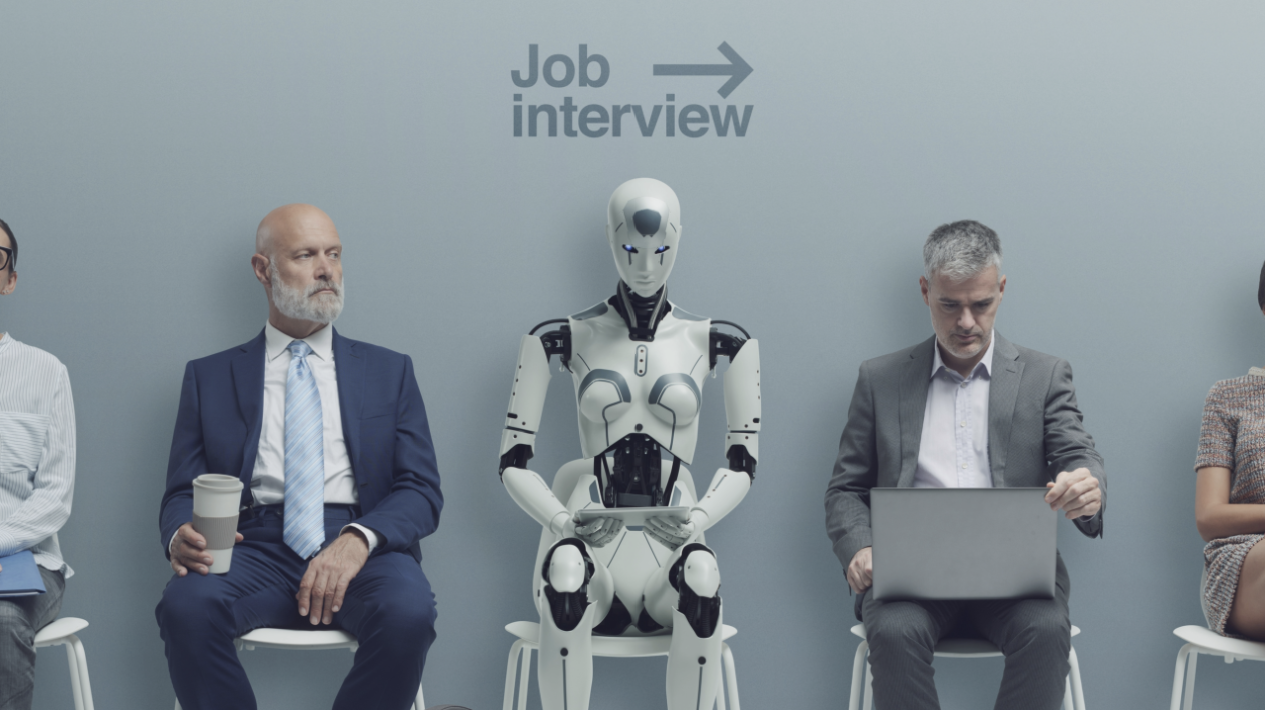
The AI Layoff Era: Are We Trading Our Future for Efficiency?
The AI layoff headlines are coming fast. But are we making a catastrophic mistake by rushing to replace instead of augment? 🧠 In my latest article, I dig into why the “replacement-first” mindset is a ticking time bomb for companies, why AI works better as an exoskeleton for your existing team, and why strategic caution in 2024 isn’t fear—it’s a survival skill. The future of work isn’t about humans vs. machines. It’s about humans with machines. But only if we’re intentional.
The 90-Second War Has Begun—And It's Rewriting the Global Technology Playbook
The 90-second war has begun. And it’s reshaping the global tech industry faster than anyone predicted. 🤖⚡ While the business world debated AI chatbots, something fundamental shifted in modern warfare—with direct consequences for cybersecurity, IT infrastructure, and talent markets worldwide. What happened: ⚡ AI compressed military decision cycles from hours to sub-90 seconds—a speed human review mathematically cannot match ⚡ 1,000+ AI-recommended targets in 24 hours; 15,000+ across the operation ⚡ A commercial AI company was blacklisted as a “national security supply chain risk” for refusing to remove safety guardrails—unprecedented for a U.S. firm What this means for tech: 🔐 Cybersecurity enters the AI-versus-AI era. Google’s $32B Wiz acquisition signals hyperscaler recognition that human-speed defence is obsolete 📊 The AI defence market races toward $29.48B by 2035—a structural supercycle is forming 💻 The line between Silicon Valley and the battlespace has dissolved. Commercial AI platforms are now operational warfare infrastructure 👥 The talent gap is a chasm. Enterprise AI adoption and combat AI deployment are no longer in the same category The defense supercycle is here. The cybersecurity arms race is accelerating. The governance frameworks haven’t caught up. Companies that understand this convergence will define the next decade.
The Silent AI Killer: Why "Data Debt" Will Cost You More Than a Failed Model
Everyone wants to hire AI engineers. Nobody wants to fix the data. 🛑 We’re witnessing an epidemic of “Confident Nonsense”—AI models that sound authoritative but are built on corrupt data foundations. Did you know? 73% of data leaders say quality issues are strangling their AI ambitions . The long-term cost of ignoring this? ❌ The $5M+ Invisible Tax: IBM estimates dirty data bleeds millions annually . ❌ The 80% Waste: Your expensive data scientists aren’t innovating; they’re scrubbing garbage . ❌ The Trust Collapse: 60% of AI projects fail to survive because the data simply isn’t ready . Garbage In, Garbage Out isn’t just a saying. In AI, it’s a recursive, logic-poisoning nightmare. Don’t feed the noise. Ready to build AI on a rock-solid foundation? Dyma Data Cleansing ensures your data works before your models do. Let’s talk.
The AI Talent Paradox: Why Outsourcing Your IT is Your Smartest 2026 Strategy
The AI talent war isn’t coming. It’s already lost—for most businesses anyway. 71% of employers can’t find the AI skills they need. Meanwhile, 95% of enterprise AI pilots deliver zero ROI. In my latest article, I break down how we got trapped in the “Half-Cook AI” cycle and why expert outsourcing partners like DYMA are the smartest 2026 strategy to flip IT from a cost center into a savings engine. Would love to hear your take—are you building in-house or partnering up?
The Next Leap: When AI Stops Assisting and Starts Building
Beyond Autocomplete: When AI Becomes the Builder (Not Just the Assistant) The era of AI as a coding assistant that suggests snippets is evolving. The next leap is here: AI as an autonomous builder. This shift moves the developer’s role from hands-on coder to strategic orchestrator. Key developments include: * Agentic AI: Systems that can take a goal—like “build a secure login flow”—and autonomously plan, code, test, and debug it. * AI Teams: Specialized AI agents (for architecture, security, testing) are beginning to collaborate like an entire engineering team on complex projects. * The Human Advantage: As AI manages the “how,” human expertise focuses on the “why” and “what”—strategic design, ethics, and novel problem-solving. This evolution is less about replacement and more about elevating the craft of software development.
Asia's ESG Adoption: A Unique Path Forged by Regulation and Supply Chains
A new analysis highlights Asia’s unique, regulation-driven path to ESG adoption, contrasting it with global trends. It examines the leading frameworks and the critical data and cost challenges companies face as voluntary reporting gives way to mandates.
Scroll to Top